
This video shows a timelapse of iron-cycling microbial enrichment cultures. 1 frame=12 hours. © 2023 by Isabel R. Baker.
Welcome to the Baker Lab at UNC Chapel Hill!
We study how life and Earth interact, focusing on the co-evolution of microbes and the chemistry of our oceans, and what that means for habitability here and elsewhere, past and present.
Established July 2026
Our research largely centers around microbial interactions with one of Earth’s most abundant and biologically important elements—iron. The amount and availability of iron has changed dramatically over Earth history, and with it, so have the biological mechanisms to transform iron for energy and nutrition. In our research, we use the interactions between biology and iron as a model for the broader co-evolution of life and our planet. In studying the evolutionary responses to environmental fluxes on short-term and geologic timescales, our goal is to not only yield insight into the rich history of life on Earth, but also to inform forecasts about biological responses to continuing global change.
Research Themes
-
![]()
Microbial (Exo)Metabolites
Small molecules released by microbes that shape ocean chemistry and ecosystems
-
![]()
Geobiology of Extracellular Electron Transfer
The co-evolution of Earth’s minerals and the proteins that transform them
-
![]()
Microbial Ecophysiology & Greenhouse Gases
Microbe-mineral and microbe-microbe interactions that control the fate of methane
-
![]()
Biogeochemistry of Global Change
Using past microbial footprints in minerals to inform the present, and vice versa

The Team
Principal Investigator

Dr. Isabel “Izzy” Baker ibaker@unc.edu
Assistant Professor of Biogeochemistry
Department of Earth, Marine, & Environmental Sciences, UNC Chapel Hill
Ph.D., Harvard University
M.Sc., Bioinformatics and Systems Biology, New York University
B.A., Biology, New York University
Dr. Izzy Baker is a geobiologist and microbial ecologist who studies the co-evolution of microbial metabolisms and ocean geochemistry, with a particular focus on microbes that “breathe” rocks. She combines laboratory experiments, computational biology, and field studies to answer fundamental questions about how microbial ecophysiologies evolved alongside Earth over deep time and will continue to evolve in the face of contemporary global change.
Prior to starting at UNC in 2026, Professor Baker was an Agouron Geobiology Fellow at Johns Hopkins University where she combined tools in biogeochemistry and molecular biology to compare signals from ancient ecosystem upheavals to contemporary global change. She was also a federal research scientist at the United States Naval Research Laboratory where her efforts focused on developing benthic microbial fuel cells (a type of "bio-electricity") and exploring how soil microbes interact with organic pollutants. You can view her CV here.
Research Technician
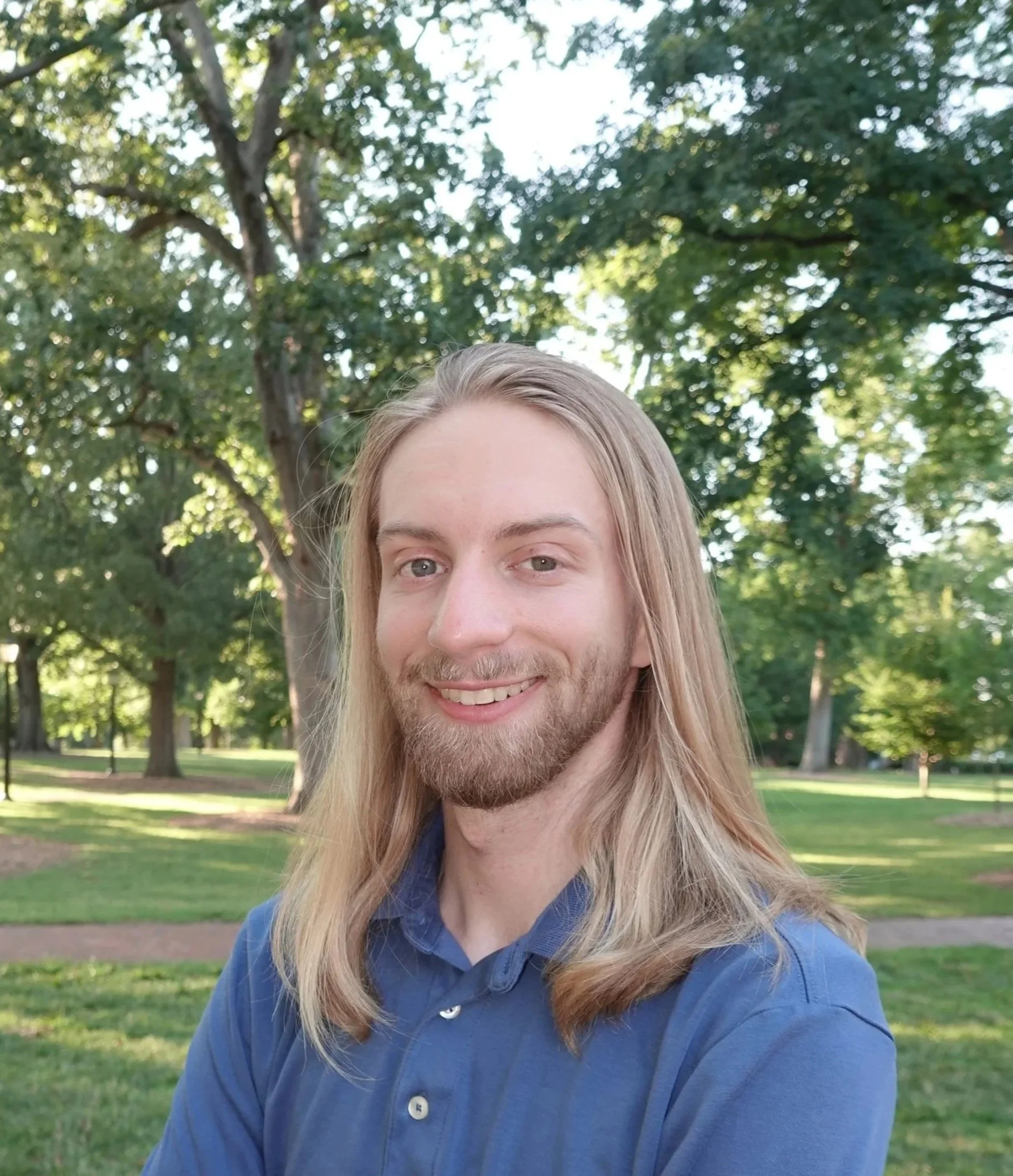
Riley Moran andriley@ad.unc.edu
M.S., Earth, Marine, & Environmental Sciences, UNC Chapel Hill
B.S., Environmental Science, UNC Chapel Hill
B.A., Geological Sciences, UNC Chapel Hill
I am a double Tar Heel from the EMES Department, and currently a research technician in Baker Lab. My background is in contaminant transport and fate in freshwater systems, as well as radiotracers like Pb-210 to study decadal-to-century-scale sediment dynamics. I am very passionate about emerging contaminants like microplastics and PFAS and understanding how natural processes interact with and transport these novel materials. I am very excited to be learning more about microbiology with Dr. Baker!
Publications
For the most up-to-date list of our papers, please check out Google Scholar.
The Baker Lab is committed to Open Science. Please reach out to Dr. Baker if you need assistance accessing any of the publications linked on this page.
In the Works
Baker, I., Hantsoo, K., Hildebrand, A., Pain, A., Lapham, L., Malkin, S., Flynn, A., and Gomes, M. (in review), Collapse of the microbial methane filter in eutrophic sediments.
Baker, I., Young, A., Larson, J., Sung, C., Kisailus, D., and DiRuggiero, J. (in prep.), Iron acquisition by endolithic cyanobacteria: an underappreciated role for oxidative processes and substrate crystallinity.
Published
Moore, K.*, Baker, I.*, Hibner, B., DiRuggiero, J., Larson, J., Trower, E., and Gomes, M. (2026), Subaerial exposure and UV radiation stress drive the formation of pustular microbial mat morphologies: Implications for the rock record, JGR Biogeosciences. [Link] *co-first authors
Keller, K., Kopf, S., McFarlin, Maloney, A., Rhim, J., Elling, F., J., Ashing-Giwa, K., Baker, I., Calhoun, A., and Pearson, A. (2025), Compound-specific carbon and hydrogen isotope analysis traces archaeal lipid signatures in cold seep marine systems, Geochimica et Cosmochimica Acta. [Link]
Baker, I., Colston, S., Hervey, W., Eddie, B., and Bird, L. (2025), Complete genome of a fluorescent Pseudomonas sp. isolated from a PFAS groundwater treatment site, Microbiology Resource Announcements. [Link]
Keller, K., Baum, M., Liu, X.L., Ashing-Giwa, K., Baker, I., Blewett, J., and Pearson, A. (2025), Constraining the sources of archaeal tetraether lipids in multiple cold seep provinces of the Cascadia Margin, Organic Geochemistry. [Link]
Baker, I. and Girguis, P. (2024), Sulfur cycling likely obscures dynamic biologically-driven iron redox cycling in contemporary methane seep environments, Environmental Microbiology Reports. [Link]
Baker, I., Matzen, S., Schuler, C., Toner, B., and Girguis, P. (2023), Aerobic iron-oxidizing bacteria secrete metabolites that markedly impede abiotic iron oxidation, PNAS Nexus. [Link]
Baker, I., Colston, S., Hervey, W., and Bird, L. (2023), Complete Genome of a Novel Serratia Species Isolated from PFAS-Impacted Soil, Microbiology Resource Announcements. [Link]
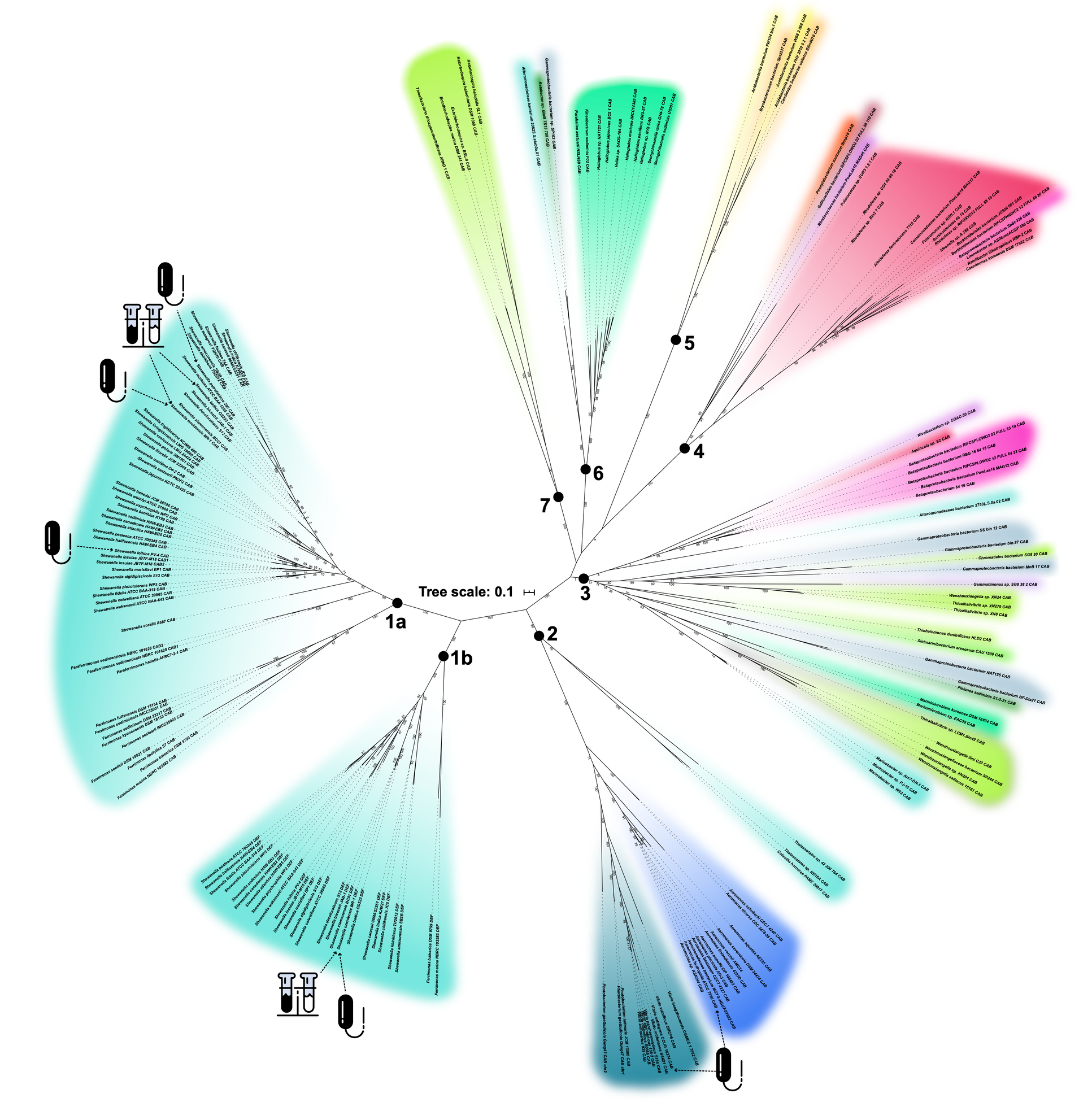
Baker, I., Conley, B., Gralnick, J., and Girguis, P. (2022), Evidence for Horizontal and Vertical Transmission of Mtr-Mediated Extracellular Electron Transfer among the Bacteria, mBio. [Link][NSF Public Affairs press release]
Datta, R., Ling, J., Kurland, J., Ren, X., Zhe, X., Yucel, G., Moore, J., Shokri, L., Baker, I., Bishop, T., et al. (2018), A feed-forward relay integrates the regulatory activities of Bicoid and Orthodenticle via sequential binding to suboptimal sites, Genes & Development. [Link]
The Baker Lab
UNC Chapel Hill
Department of Earth, Marine, and Environmental Sciences
Murray Hall, Room 4101
121 South Road, Chapel Hill, NC 27514
USA